
How we work
Our approach is grounded in evidence, shaped by relationships, and designed to build the kind of capacity that outlasts our involvement.
Change that lasts requires more than a program
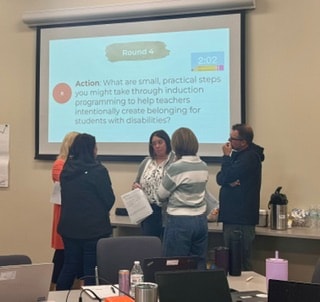
Too often, improvement efforts stall not because the ideas were wrong, but because the conditions for people-centered change were never built. New curricula arrive without sufficient professional learning to support them. Coaching programs launch without clear alignment or models. Strategic plans are written with intentional implementation strategies.
We work differently. Every engagement begins with deep listening to understand your context, your history, and the people doing the work. From there, we design support that builds genuine capacity: the knowledge, skills, and structures that allow your organization to keep improving long after we're gone.
Four interlocking foundations
Good ideas fail without a clear strategy for implementation
We apply evidence-based implementation frameworks to ensure that new practices are adopted with fidelity, sustained over time, and scaled thoughtfully. We pay close attention to implementation stages, drivers, and the organizational conditions that either support or undermine change.
- Stage-appropriate support — what works at exploration doesn't work at full implementation
- Implementation drivers: competency, organization, and leadership working together
- Fidelity with flexibility — maintaining core components while adapting to local context
- Data-informed course correction throughout the change process
Every part of the system affects every other part
We approach organizations as complex, interconnected systems, not collections of isolated problems to be fixed one at a time. This means we look for root causes rather than symptoms, attend to relationships and culture alongside structures and processes, and help leaders see how decisions in one part of the system ripple through others.
- Root cause analysis before solution design
- Attention to feedback loops and unintended consequences
- Coherence across initiatives reducing fragmentation and initiative fatigue
- Building shared mental models across stakeholder groups
Educators learn best when learning is relevant, social, and sustained
We design professional learning grounded in what research tells us about how adults learn and change their practice. This means moving beyond one-time workshops toward job-embedded, collaborative, and inquiry-driven learning.
- Learning connected to real work, real students, and real challenges
- Collaborative structures that build collective efficacy
- Reflection and inquiry as core professional practices
- Gradual release toward educator-led learning communities
Our goal is to make ourselves unnecessary
We measure our success not by how long organizations need us, but by how quickly they develop the internal capacity to sustain and extend the work themselves. This means investing heavily in developing internal facilitators, coaches, and leaders and designing systems and structures that don't depend on external support to function.
- Developing internal facilitators and coaches from the start
- Transferring knowledge and tools, not just delivering services
- Building leadership capacity at every level of the system
- Designing for sustainability before the engagement ends
A process built around your context
No two partnerships look exactly alike, but each is grounded in the same approach: understand deeply, design collaboratively, implement with support, and build the capacity for the work to continue and grow.
Listen & Learn
We begin every partnership with deep listening. Before recommending anything, we invest time in understanding your context, your history, your people, your current-state systems, and the conditions that shape what's possible. This might include interviews, focus groups, data review, and observation.
Design Together
We don't arrive with a pre-packaged solution. Drawing on what we've learned, we work alongside your team to design an approach that fits your context, builds on your strengths, and addresses your most pressing needs. Stakeholder voice is central to this phase.
Implement with Support
We provide hands-on support through implementation by facilitating learning, coaching leaders and practitioners, monitoring fidelity, and helping teams navigate the inevitable challenges that arise when organizations try to change. We stay close to the work.
Build Toward Independence
From the beginning, we're working toward the end of our involvement. This means developing internal capacity, transferring tools and knowledge, and designing systems that can sustain the work without us. We celebrate when organizations no longer need us.
The values that shape every engagement
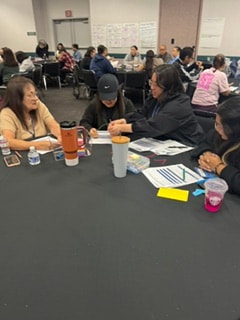
Educators are professionals who deserve to be treated as active learners, not recipients of training.
Sustainable change is built with people, not done to them.
Equity is not a program, it's a lens applied to every decision.
Relationships are the infrastructure of improvement.
Complexity requires humility. We don't have all the answers, and we say so.
The goal is always capacity, never dependency.
Want to talk through your context?
The best way to understand whether we're the right partner is a conversation. No agenda, no pitch — just a chance to listen and think together.